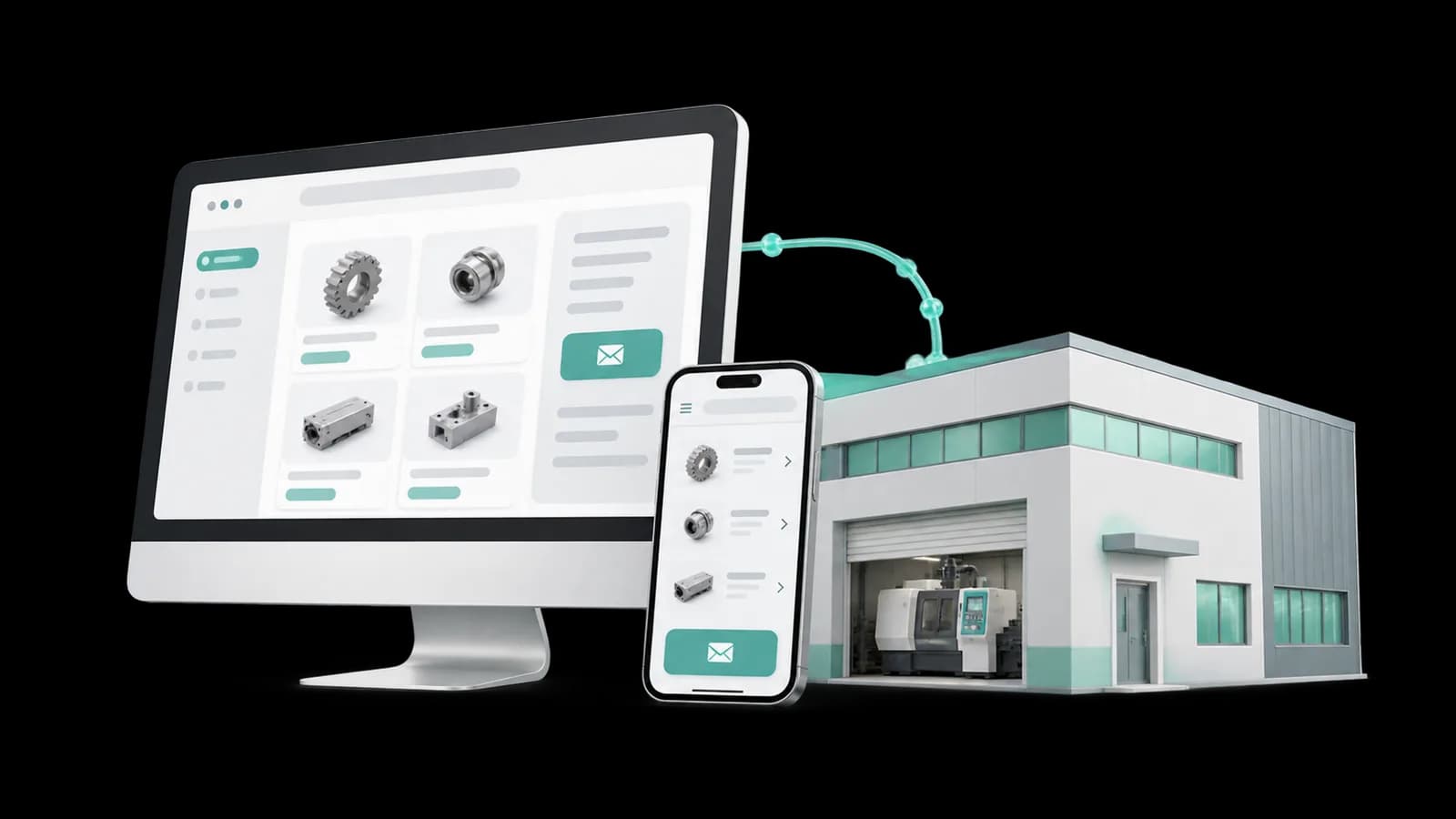
Most companies in Hsinchu are in the tech industry, and their website needs are different from those of general businesses. They often need English versions, recruitment pages, technical document downloads, and investor sections. This page explains our working methods when taking on projects in Hsinchu, as well as what we learned from collaborating with engineers with technical backgrounds, including common requirements, collaboration rhythms, multi-language architecture, and costs. These are all important considerations that have been accumulated through actual projects, which you can refer to when making internal proposals.
Service Statement: Falcon operates from its base in Taoyuan and does not have offices or stores in Hsinchu. Collaboration with Hsinchu clients is primarily online, and appointments can be made as needed. This page does not imply that we have a presence in Hsinchu.
The audience for tech industry websites is not just customers, but also job seekers and investors. This means that the requirements are different from those of general businesses:
Bilingual or multilingual (Chinese, English, Japanese)
Clients from the Hsinchu Science Park typically have engineering backgrounds and communicate differently than typical businesses: they need clear specifications and the ability to track progress through an order management system, rather than weekly phone calls. We align our collaboration methods with the daily tools and processes of the engineering team:
Using Next.js + React + TypeScript (familiar to most engineers)
Integration with GitHub / Slack / Linear is possible
Terms regarding NDAs, IP ownership, and source code hosting can be negotiated
Our perspective: Websites for the technology industry are not about flashy animations
When building websites for technology clients, we've learned that they don't need flashy animations, but rather clear and professional explanations. Things like the ease of downloading technical documents, the completeness of the English version, whether the recruitment page integrates with an ATS, and the availability of financial reports in the investor section – these "unsexy" aspects are actually what technology websites are used for. Therefore, when we take on these projects, we first clarify who the website is primarily for (the client, job seekers, or investors), structure the information accordingly, and then discuss the visuals. We use Next.js + React + TypeScript, which are familiar to most engineers, making communication more efficient.
Collaboration rhythm for Hsinchu Science Park projects
When working with companies from the Hsinchu Science Park, there are certain aspects of the process that are less common in typical projects. We have become accustomed to these: before signing, there is often back-and-forth with legal regarding NDAs and IP terms, which can be done concurrently with the requirements discussion; the contacts are typically from engineering or marketing backgrounds, and requirements can be communicated directly through work orders and wireframes, which is more efficient than presentations; before launching, there are often internal security and procurement processes to go through, which we prepare technical architecture documentation and data processing documents in advance. In terms of schedule, these processes typically take two to four weeks longer than the actual development – this needs to be factored into the schedule, rather than trying to cram everything into the development phase. For projects with internal deadlines (such as conferences, fundraising, or recruitment seasons), it is recommended to schedule backwards from the deadline, first securing the legal and security aspects.
How should a multilingual website be structured?
The most common mistake with English versions for the technology industry is "doing the Chinese version, outsourcing the translation, and then just adding /en." The correct multilingual architecture should be decided in the early stages of development: URL structure (sub-path /en is a practical choice in most cases), hreflang tags to tell search engines about the language versions, separate metadata and sitemaps for each language, and the translation process – technical and marketing content needs to be reviewed by someone who understands the product; translations from pure translation agencies often reveal errors in terminology. Our recommendation is always to first launch the main language version, and then launch the second language version after the translation and review are complete. A half-finished English version will negatively impact the international image, not enhance it.
Fee Explanation
Pricing is consistent nationwide: standard website, TWD 20,000; customized system, TWD 75,000. Common add-on options in the tech industry, such as multi-language support, recruitment system integration, an investor-specific area, and a technical document library, will be listed with their individual costs and ranges on the quotation. No additional charges will be added later. Complete source code will be delivered, and terms regarding IP ownership and hosting can be negotiated according to your legal requirements.
Partner clients
ICTE 2025 International Academic Conference
Academic
International Academic Conference website and paper submission system
Image website 20,000 project start, customized system 75,000 start, and priced consistently nationwide. Multilingual, recruitment integration, and investor section are add-on options, and their costs are listed separately on the quotation.
Can we sign an NDA?
Yes, NDAs, IP ownership, and source code hosting terms can be negotiated.
Can we do SEO for the English version of the website?
Yes, a multilingual website will handle hreflang, metadata, and content structure for each language version. However, it's important to note that SEO for the English version faces international competition, and keyword strategies should be planned separately from the Chinese version.
Can we collaborate with your engineering team?
Yes, this is common in projects in Hsinchu. We can integrate with your GitHub, follow your code review process, and deploy to your specified environment. After handover, your internal team can maintain it.
Will a multilingual website take longer to develop?
Yes, the main delay is due to translation and review. While the structure and functionality are shared, the content for each language version needs to be independently completed. We recommend launching the primary language version first, then translating and launching the second version, without waiting for each other.
Who will maintain the investor section after delivery?
We will create a module that can be updated independently in the back-end: annual reports, financial statements, and press releases can be uploaded from your existing platform, without needing to contact us. If you require ongoing maintenance, we can also provide a maintenance contract based on the scope of work.
With a limited budget, can the website be developed in stages?
Yes, a common approach is to launch the core pages (homepage, products, team, contact) first, and then add pages for fundraising or expansion, such as the recruitment page and the English version. The architecture will be designed with future expansion in mind, so adding pages later won't require a complete rebuild.
Do you also handle projects for academic and research institutions?
Yes, the website for the ICTE International Academic Conference, which is a case study, is an academic and research project, including a paper submission system. We can coordinate with your procurement and accounting processes, but you need to factor in the time required for administrative procedures.