
Peak call volume
When the volume of calls exceeds the available staff, waiting times, missed calls, and call returns will all occur simultaneously.
AI voice customer service is not simply about plugging a chatbot into a phone. Businesses truly need to ensure that the content of the call flows into a controlled workflow: obtaining necessary information, querying rules, creating work orders or tickets, synchronizing existing systems, and handing over to a human agent when the AI cannot confirm. Falcon provides this type of customized integration, and GoGoCha provides publicly available evidence of our implementation.
Does not promise zero errors or complete replacement of human agents; first, verify with real-world tasks and failure scenarios whether it is worth implementing.
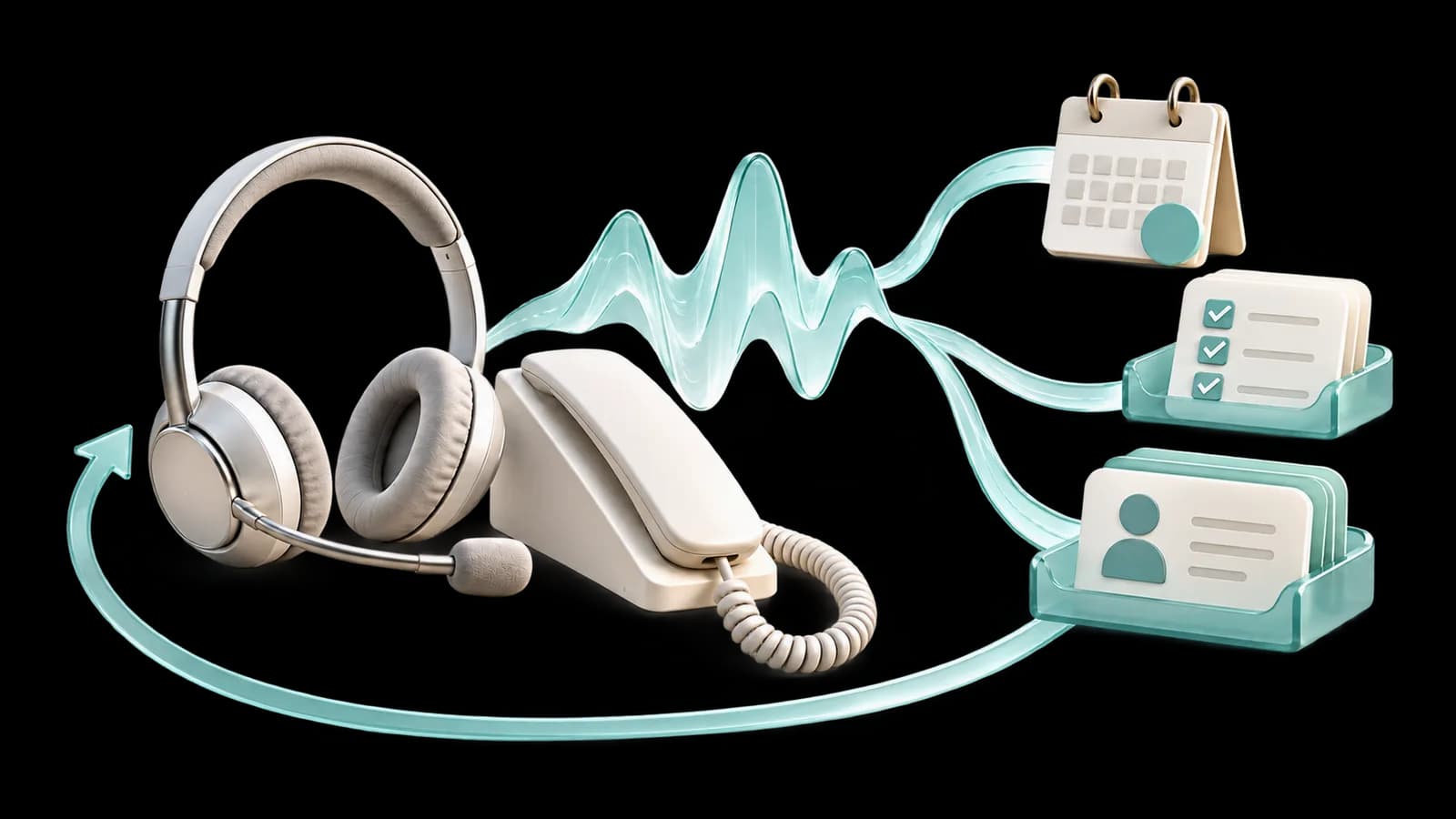
Illustration only; not a recording of a real GoGoCha call or a genuine customer service commitment.
Why calls break
The value of automated phone calls lies in what happens after the call ends: have the data been verified, has the task been created, has the status been synchronized, and can errors be handled by a human agent?
When the volume of calls exceeds the available staff, waiting times, missed calls, and call returns will all occur simultaneously.
Information stays in the call or transcript, leaving staff to log into the CRM, work-order or dispatch system and enter it again.
There are different data sources for phone, LINE, website, and app, and if they are not synchronized, it is easy to repeat processing.
Without proper validation, field confirmation, and manual intervention, misinterpretations by the voice model can directly lead to operational problems.
One workflow, six controls
Each step should include verifiable inputs, rules, and failure exits. The voice model is just one layer; the actual ability to operate depends on the backend workflow.
Existing routing, cloud phone, or SIP routing will handle incoming calls.
The AI obtains necessary fields based on the task; if uncertain, it will ask clarifying questions, and will not guess addresses, amounts, or identities.
Verify business rules, data formats, permissions, and execution ranges in the backend.
Create assignments, work orders, appointments, or CRM records, rather than just leaving a summary of the conversation.
Synchronize status to the backend, LINE, App, or existing company system.
Maintain human oversight for low confidence, sensitive matters, or system failures.
Evidence boundary
Green indicates capabilities supported by public case evidence. Gray indicates options for a custom enterprise project, subject to the phone environment and system interfaces, followed by POC validation, integration testing and formal acceptance.
Organize call content into fields usable by the system; follow up on incomplete information and manually handle cases where confirmation is not possible.
View public evidenceThe system not only generates transcripts, but also directly enters the backend order creation, queue, and instant notification processes.
View public evidenceShare data and dispatch backend across different entry points, reducing redundant input and inconsistencies between systems.
View public evidenceIntegrate with existing telecommunications and switch infrastructure; confirm supplier, number, and routing restrictions before formal setup.
Based on peak volume, waiting strategies, and the capacity of manual agent seats, and verified through stress testing and acceptance criteria.
Customize based on notification, permission, retention, and deletion policies; not all calls are automatically suitable for permanent storage.
Integrate with existing systems via API or event bridging; bidirectional synchronization depends on the permissions and interfaces of the other system.
Based on the purpose of contact, consent management, the capabilities of the telephone service provider, and internal process design, individual POC validation is required.
Public implementation
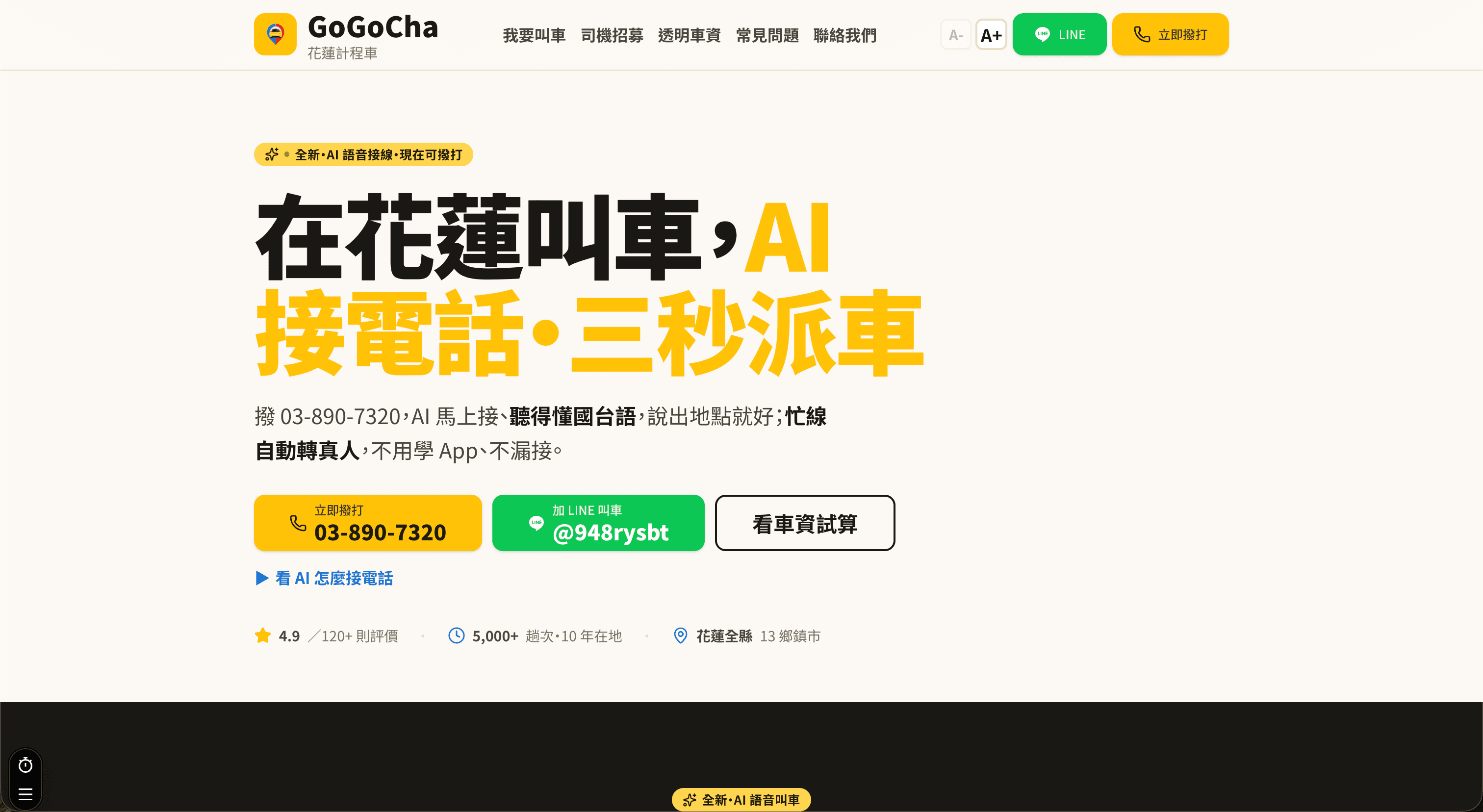
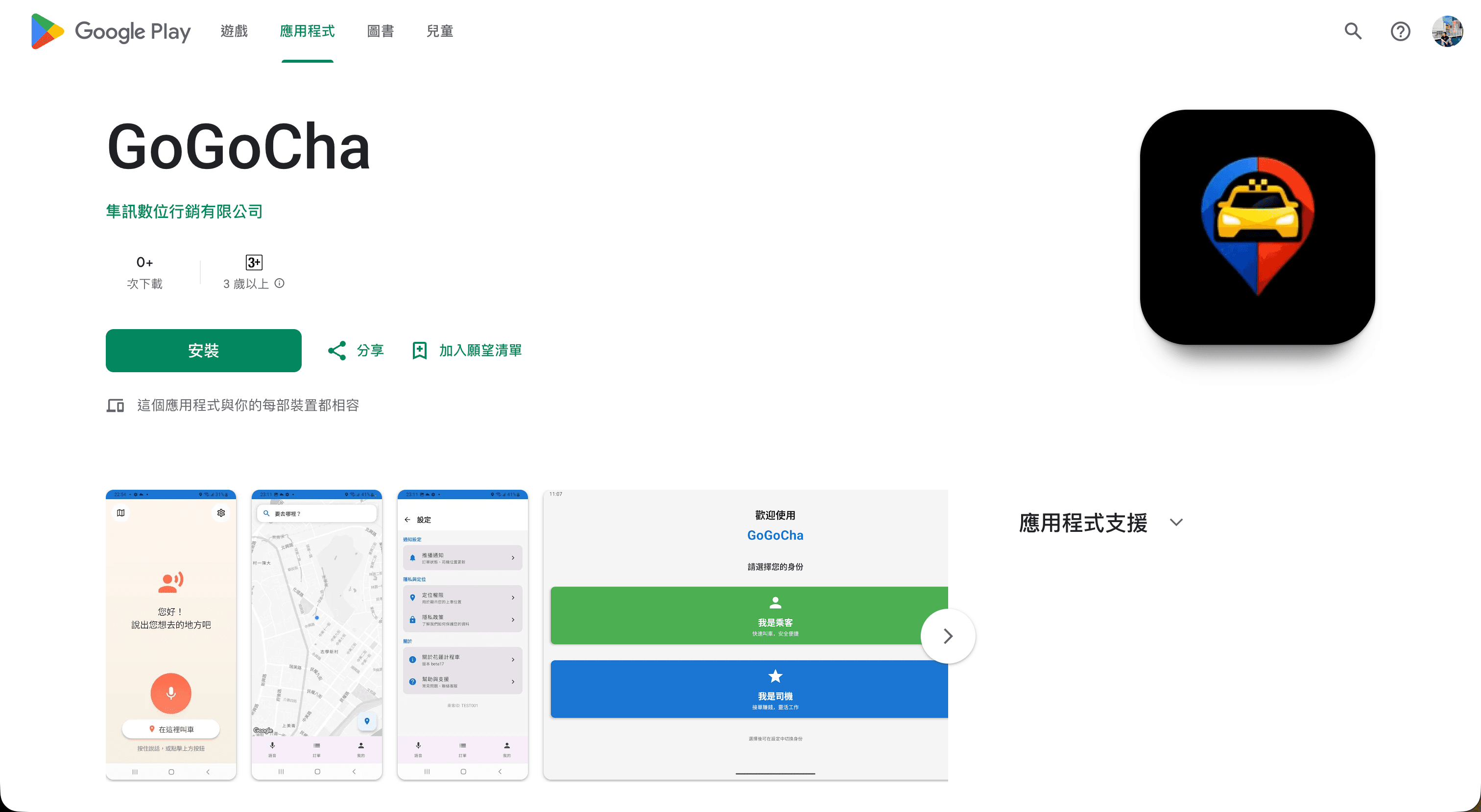
GoGoCha is not a promoted taxi brand here, but rather evidence of Falcon's capabilities: the ability to integrate phone, website, and LINE requests into a single real-time dispatch backend, which then synchronizes with driver/passenger apps and operational interfaces.
Falcon's scope:Brand website, AI phone entry, real-time dispatch backend, LINE Bot, App, and operational system integration.
Public technologies:Express, PostgreSQL, Redis, BullMQ, Socket.IO, and OpenAI.
Evidence limitations:No publicly available revenue, order, or cost savings data; no information on connection rates or call SLA; the "3 seconds" only represent the product design target.
System boundaries
Integration depends on whether your existing systems provide the required permissions, APIs, events or standard telephony interfaces. A list of logos cannot establish that. We confirm responsibility boundaries before providing a formal quote.
Main business number, PBX, SIP and cloud telephony
Recognition, questioning, response, manual intervention
Rules, permissions, queues, state machine
CRM, ERP, dispatch, work orders, appointments
Use cases
After collecting the location, task, and contact information, it is sent to the dispatch or scheduling process.
Identify fault types, service locations, and time slots, create work orders, and notify personnel.
Establish appointments based on available time slots, qualifications, and rules, with manual intervention for exceptions.
Query status, FAQs, and case creation; sensitive complaints are handled by human agents.
It is not recommended to automate tasks such as medical diagnoses, legal conclusions, major customer complaints, payment authorization, or identity disputes in the first phase; these tasks should primarily be handled manually.
Fail safely
Design fallback mechanisms before implementation; this is often more important than adjusting a single prompt. Each project should at least validate the following mechanisms.
Implementation sequence
Review call volume, existing numbers, PBX/SIP, human agent seats, system APIs and risks that must not be automated.
First, clearly define which fields the AI needs to access, what actions it should be able to perform, and under what circumstances it should be escalated to a human.
Test technical feasibility using representative conversations, background noise, incorrect input and system failures.
Integrate enterprise systems and verify permissions, retries, concurrency, notifications and data consistency.
Start with controlled time periods or a single task, then adjust using actual error and human handover data.
Custom quotation
Do not use the standard pricing for general chatbots for phone projects. Implementing an AI phone system involves telecommunications, real-time voice, enterprise APIs, human agents, and operational responsibility; it is necessary to first complete the requirements and environment assessment.
Provide the current situation and obtain a list of requirements.Decision library
First, understand how it translates a call into system actions, then determine if it's suitable for implementation.
02Break down the cost components of a custom quote, avoiding unrealistic low prices to attract inquiries.
03Choose based on task risk, process changes, and service quality, rather than complete replacement of human agents.
04Define the boundaries of responsibility between the phone layer, the AI layer, and the enterprise system layer.
05Use gold testing cases, failure paths, and system results to determine if it's worth proceeding with full implementation.
06Address issues like VAD, barge-in, tool call latency, and end-to-end delays without relying on a single-second metric to mask the problem.
07Identify the risk boundaries for recordings, transcripts, permissions, storage, and test data.
08Design trigger conditions, context handoffs, and fallback processes for full connection, disconnection, and system failure.
Buyer questions
It is not recommended to use "complete replacement" as the primary goal. Automated systems are best suited for clear, repetitive queries and order creation. Complaints, financial transactions, compliance, identity disputes, and low-confidence conversations should be handled by humans. A good system first defines the handover conditions, rather than forcing the AI to continue indefinitely.
It is usually possible to evaluate using existing systems, but you need to confirm support from the telecom provider, virtual number, PBX/SIP, and the transfer method and recording requirements. These are custom requirements that need to be confirmed before the POC, and we cannot guarantee a direct connection without first assessing the environment.
Important fields should be repeated and verified, and then the backend should perform format and business rule checks. If the AI cannot confirm, has low confidence, or encounters sensitive information, the context should be transferred to a human agent to avoid the user having to repeat everything.
Customized quotes are provided. The cost depends on the direction of calls, concurrent lines, telecommunications and PBX systems, language, integration with enterprise systems, recording storage, number of operator seats, deployment, and SLA; as well as the actual usage of phone, voice recognition, voice synthesis, and models.
Publicly available data can demonstrate the AI phone entry, real-time dispatch backend, and integration with websites, LINE, driver/passenger apps, and operational backends. Unpublicized fleet revenue, labor savings, and actual call SLAs will not be used as performance claims.
Tell us how you currently handle calls, what records you need to create after a call, and what mistakes you need to avoid. We will use the GoGoCha interface and workflow as a starting point, comparing it to your process, system interface, and manual handover boundaries to determine if a Proof of Concept (POC) is worthwhile.
Submitting the form only initiates a request for a process demo. The time and scope of the demo will be confirmed separately, and does not include access to your formal system. The scope, cost, and acceptance criteria for the POC will be discussed separately. Please do not provide private recordings, customer data, or system passwords.
Request a workflow demo