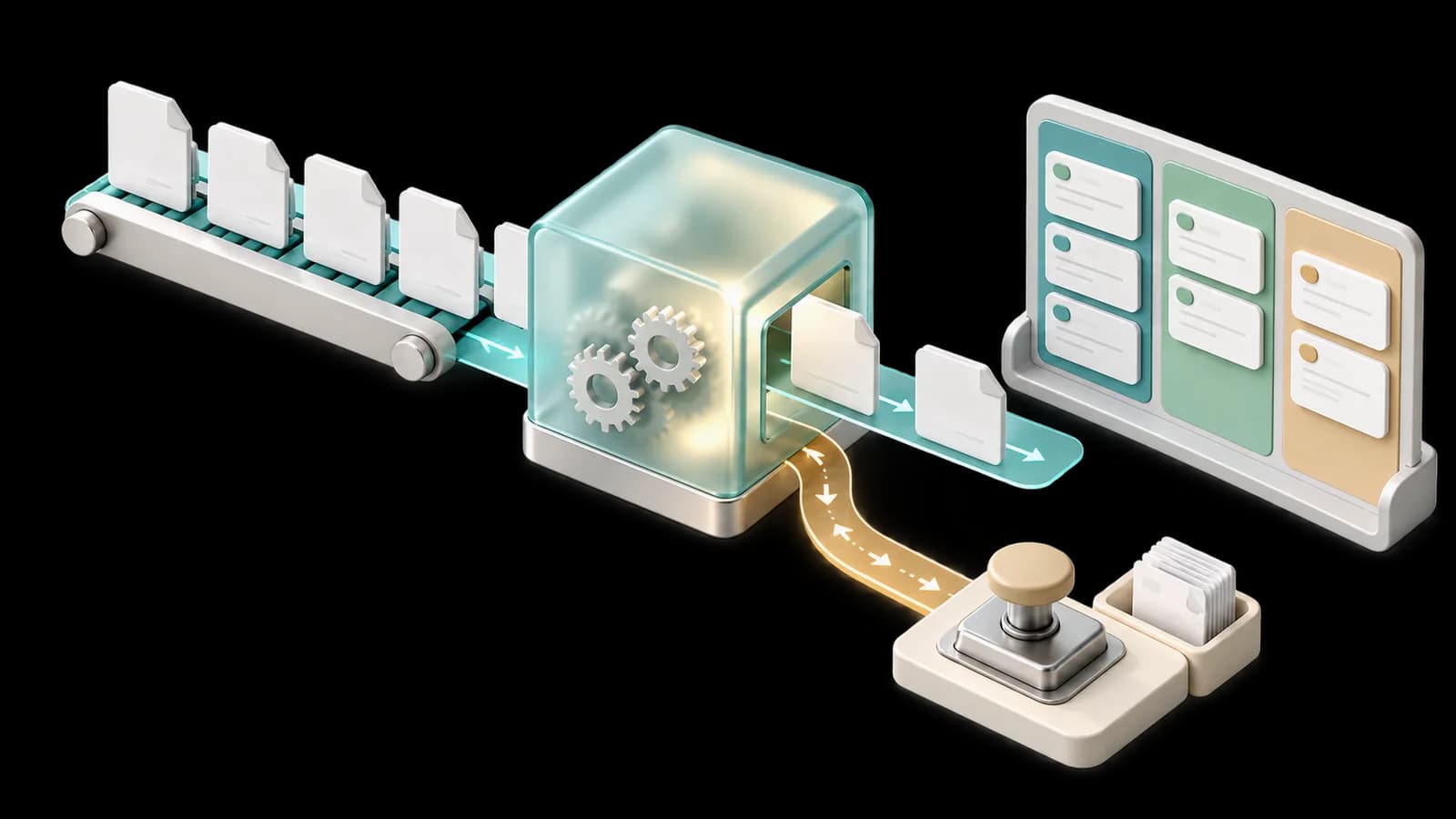
The key to successfully implementing AI tools is not "which model to use," but rather "identifying the highest ROI entry point." Our first step is to assess your processes and identify which tasks are suitable for AI to replace or assist with, and then decide whether to build it in-house or use a ready-made SaaS solution – not every process needs AI, and forcing it in can be a waste of resources.
Customized GPT / Claude Assistants (specific domain knowledge)
Flexible Technology Choices
No Vendor Lock-in: Integrate with GPT, Claude, and Gemini, and choose the most suitable model for each task
Flexible Deployment: Use cloud APIs or deploy open-source models on customer-owned servers (data remains private)
Full Source Code Delivery, No Long-Term Licensing Fees
Experience integrating with LINE, Slack, and customer-owned backend systems
How accurate are AI customer service bots? The key is RAG, putting answers into your own knowledge base
The most common concern customers have is, "Will the AI give incorrect answers?" Yes, this is inherent in language models – they are naturally prone to fabricating information ("hallucination") to make their responses sound correct. Our approach is not to pretend this problem doesn't exist, but to manage it within acceptable limits using RAG (Retrieval-Augmented Generation): first, break down your product documentation, FAQs, and SOPs into smaller segments and create vector indexes. When a user asks a question, the system first "retrieves information" and then allows the AI to "answer based on the retrieved content," with citations provided. If it cannot answer, we honestly admit, "I'll connect you with a human," rather than making things up. We prioritize transparency: RAG reduces error rates and makes answers traceable, but it doesn't guarantee zero errors. For high-risk questions (financial, legal, medical), we always retain human oversight.
What to do when the AI can't answer: transferring to a human and designing the conversation flow
A good AI customer service system is valuable not only for what it can answer, but also for how it handles situations where it cannot. We design escalation rules: if the AI answers incorrectly twice in a row, if the user uses emotional language, or if they ask about sensitive topics like payments and refunds, we automatically transfer the complete conversation to a human, so the customer doesn't have to repeat themselves. The conversation flow is hybrid – fixed processes (checking orders, making reservations, reporting issues) follow rules to ensure accuracy, while open-ended questions are handled by the AI, using intent recognition and multi-turn memory to understand the context (e.g., if the user asks "How long will it take to return?", then "How many days?", the system understands that both questions refer to the same thing). Pure decision trees are too rigid, and letting the AI run completely wild can lead to unpredictable results. The best approach is to find a balance.
Our perspective: Focus on ROI, not just AI for AI's sake
A common situation is that business owners see news about AI and think, "We should implement it too," but they don't know what problem it will solve. Our approach is the opposite: we first identify the "repetitive, labor-intensive, and rule-based" areas where the ROI is most easily calculated. For example, we implemented AI voice answering for a taxi fleet in Hualien, where a large number of calls were handled by repetitive human labor. The AI can handle both immediate voice conversations and automatically dispatch vehicles based on pre-defined rules. This is a cost-effective solution. On the other hand, if you simply want a "impressive-looking" AI, we will honestly tell you that it's not worth the investment.
Real-world AI projects
We have delivered AI applications, including the AI phone answering and SmartDispatcherV2 backend for GoGoCha Hualien taxis, multi-model deployment of Claude/Gemini/OpenAI for the dating game Alive, and the 7 emotional support system, which are available on iOS/Android; as well as LINE appointment systems for traditional Chinese medicine clinics (including concurrent control and a large number of E2E tests). These are real systems that are currently in operation, not demos.
Falcon AI tool implementation process
The actual steps we take when implementing AI tools for businesses.
1
Process assessment and identifying entry points
Assess your workflows and identify the repetitive, labor-intensive, rule-based areas with the highest ROI as starting points for AI implementation.
2
Choosing between self-built and SaaS
Based on data sensitivity, integration needs, and cost, decide whether to use cloud APIs, open-source self-hosting, or existing SaaS.
3
MVP development
Develop a minimum viable product (MVP) that can be tested. You can usually see a prototype within two weeks, and early validation is possible.
4
Feedback and adjustments
Get feedback from actual users and adjust prompts, knowledge bases, and interaction flows accordingly.
5
Integration and delivery
Integrate with existing systems, deploy, and provide source code and operational instructions.
AI tool development — Transparent Pricing
All packages include complete service content, with no hidden fees.
MVP for AI Customer Service
TWD 30,000 /Project start
Suitable for:Validation Process and Use Cases
Basic Conversational Interface
Small Knowledge Base
Single Entry Point on Website or LINE
Testing and Source Code Delivery
Customized AI Assistant
TWD 75,000 /Project start
Suitable for:Companies with clear process and data integration needs
Custom process
Integration with Company Systems
Permissions and Auditing
Manual Handling Procedures
Handover of Operations
Frequently Asked Questions
How much does it cost to develop an AI customer service system?
The MVP version has a one-time fee of approximately TWD 30,000, plus a monthly API fee of TWD 10,000–30,000 (API fees reflect the actual usage costs of third-party services and are not discounted). Customized, complex versions range from TWD 75,000 to TWD 125,000. The specific price depends on the required features and the complexity of integration.
How long does it take to develop an AI customer service system?
The MVP typically takes 3–4 weeks; full customization takes 6–12 weeks. Using agile development, you can usually see a working prototype by the second week.
Why should I hire you to develop an AI customer service system instead of using ChatGPT myself?
If you are using it for personal assistance, using ChatGPT yourself is fine. Customized development is suitable for: shared use by employees/customers, connecting to internal data, integrating with existing systems, and complying with data compliance requirements. We recommend first consulting to determine which category your needs fall into.
Will customer data be leaked?
We design based on the sensitivity of the data: low sensitivity can use OpenAI/Anthropic APIs (with data retention policies); high sensitivity can deploy open-source models on your own servers, ensuring complete data control. We have experience with developing medical appointment systems with concurrency control and testing, understanding the requirements for handling sensitive data.
Will the AI customer service system give incorrect or misleading answers?
Language models inherently have "hallucinations" (making up information). We use RAG to limit the answers to your provided knowledge base, with source citations, and escalate to a human agent when unable to answer. This helps to minimize error rates. However, we do not guarantee "zero errors" – high-risk questions such as those related to finance and compliance will always require human oversight.
How can I tell if the AI customer service system is effective?
Look at measurable operational metrics, not just "feeling smarter." Common metrics to track include: resolution rate (the percentage of conversations that are resolved without human intervention), first response time, customer satisfaction (CSAT), and changes in labor costs. The actual numbers will vary depending on your industry and the maturity of your knowledge base. We will discuss with you in advance which metrics to use and how to measure them, avoiding unrealistic promises.
Once the AI customer service system is launched, is that it?
AI customer service is an ongoing process, not a one-time purchase. After launch, you need to regularly review incorrect conversations, fill in gaps in the knowledge base, and update the system with new product features. We provide the source code and maintenance documentation, so you can maintain it yourself or outsource it to us on a monthly basis.
How do I choose an AI customer service system or vendor?
First, determine whether you need a "ready-made SaaS" or "custom development" – if you have standard requirements, a small team, and need to launch quickly, SaaS is more convenient. If you need to integrate with existing systems, keep your data on your own servers, or have unique processes, custom development is more suitable. When choosing a vendor, consider: whether they can use RAG to limit answers to your knowledge base, whether they have a mechanism for escalating to a human agent, who owns the source code and data, and how the system will be maintained after launch. Don't just be swayed by the "smartness" of the system; ask about what happens when it can't answer.