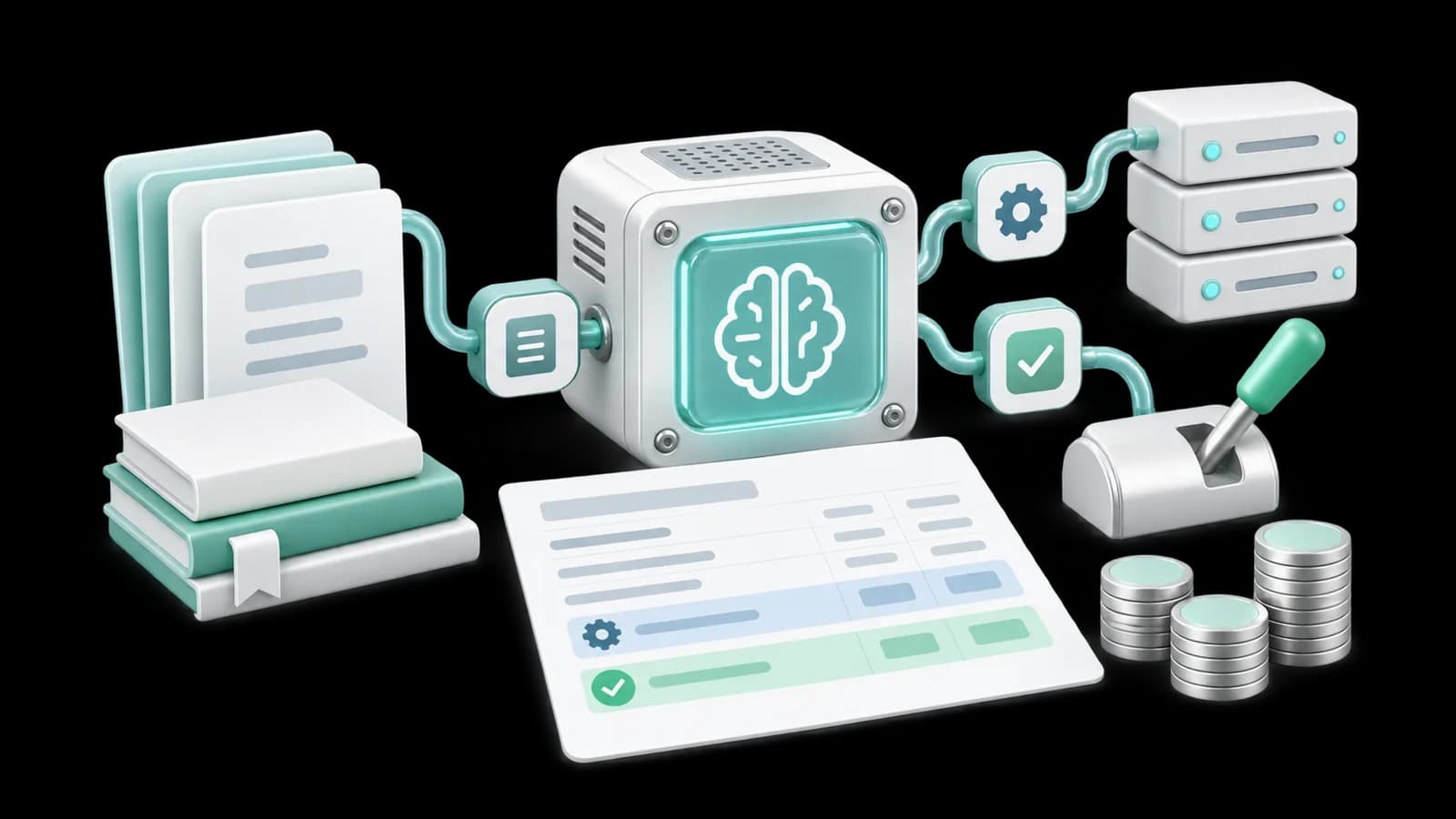
AI Customer Service MVP: TWD 30,000 project start-up cost. The AI project costs are divided into two parts: a one-time setup fee and ongoing usage fees for the model. We separate these costs in the quote to ensure transparency and honesty for both parties.
MVP for AI Customer Service
TWD 30,000 /Project start
Suitable for:Validation Process and Use Cases
Includes
Basic Conversational Interface
Small Knowledge Base
Single Entry Point on Website or LINE
Testing and Source Code Delivery
Customized AI Assistant
TWD 75,000 /Project start
Suitable for:Companies with clear process and data integration needs
Includes
Custom process
Integration with Company Systems
Permissions and Auditing
Manual Handling Procedures
Handover of Operations
Why are the construction costs and model usage fees listed separately?
The setup costs are one-time: this includes dialogue flow design, knowledge base setup, interface and system integration, and testing and delivery. The usage fees are ongoing: each dialogue call requires a language model API, which the platform charges based on usage. Higher usage translates to higher costs, while lower usage results in lower costs. We recommend that these fees be paid directly from the client's API account – pay only for what you use, with transparent billing and no markup from intermediaries. The quotation includes both setup and usage costs, allowing you to accurately calculate your actual monthly operating costs.
Who is responsible for organizing the knowledge base? What percentage of their workload does this represent?
Based on our experience with these projects, the effectiveness of AI customer service is approximately 70% dependent on the quality of the knowledge base, rather than the model selection. The knowledge scattered across employee minds, LINE conversations, and old documents needs to be organized into structured Q&A and process documents before the AI can effectively answer questions. This division of responsibilities should be clearly discussed during the quoting process: the client provides the raw materials and domain knowledge, and we are responsible for structuring, deduplication, and testing the coverage. The more disorganized the materials, the greater the effort required for organization, and this will be reflected in the pricing.
What are the key differences between an MVP and a full-fledged product?
The TWD 30,000 MVP (Minimum Viable Product) aims to validate: whether AI answers, using a real knowledge base and real customer queries, can meet your desired standards. If the validation is successful, we move on to the next stage, which involves customizing the system for 75,000 users – including integrating with existing enterprise systems, implementing access controls, and transitioning to manual support. If the validation fails, we stop at the MVP stage, minimizing losses. We do not recommend skipping the validation and directly proceeding to the full version, as no one should make promises about performance before the knowledge base has been thoroughly tested.
MVP Phase: Basic conversational interface + small knowledge base + single entry point (website or LINE)
Acceptance criteria: Based on a real-world customer problem and the quality of the solution provided.
Official Version: System Integration, Access Control and Auditing, Manual Handover, and Operational Transition
Each stage can be quoted and inspected independently, allowing you to pause at any point.
Impact of data privacy and deployment options on pricing
Most projects utilize cloud-based model APIs, which offer low costs and good quality. However, if your industry has specific requirements for data residency or privacy (such as in healthcare, finance, or government), you will need to evaluate the feasibility of on-premise deployment or data anonymization processes. This will significantly increase the costs associated with setup and maintenance. It is important to discuss these requirements upfront, as they not only affect the price but also the technical direction of the project.
Frequently Asked Questions
What does an AI-powered customer service MVP with a budget of 30,000 TWD include?
Core dialogue interface, small knowledge base setup, website or LINE single-entry integration, testing, and delivery of source code. The purpose is to validate the effectiveness using real data, without involving enterprise system integration or manual phone support.
What is a reasonable estimate for the monthly API costs for a model?
This depends on the volume of conversations and the length of the responses. The estimation method is: estimated monthly conversations × average token usage per conversation × model price. We will provide an estimate based on actual usage after the MVP testing, rather than simply quoting a monthly fee.
Should I subscribe to a SaaS customer service tool or outsource development?
SaaS is typically faster and cheaper if you don't need to integrate with internal systems. Outsourcing development can be more cost-effective in the long run if you need to integrate with order, inventory, or CRM systems, or if you have custom processes. A detailed cost comparison is available in our article on the cost of implementing AI customer service.
What does maintenance include after launch?
Knowledge base updates, quality monitoring of responses, model version adjustments, and bug fixes. Maintenance can be billed monthly or by the hour. The handover includes operation documents, and the client team can take over independently.