What is AI-powered voice customer service? Enterprise implementation architecture and suitable scenarios
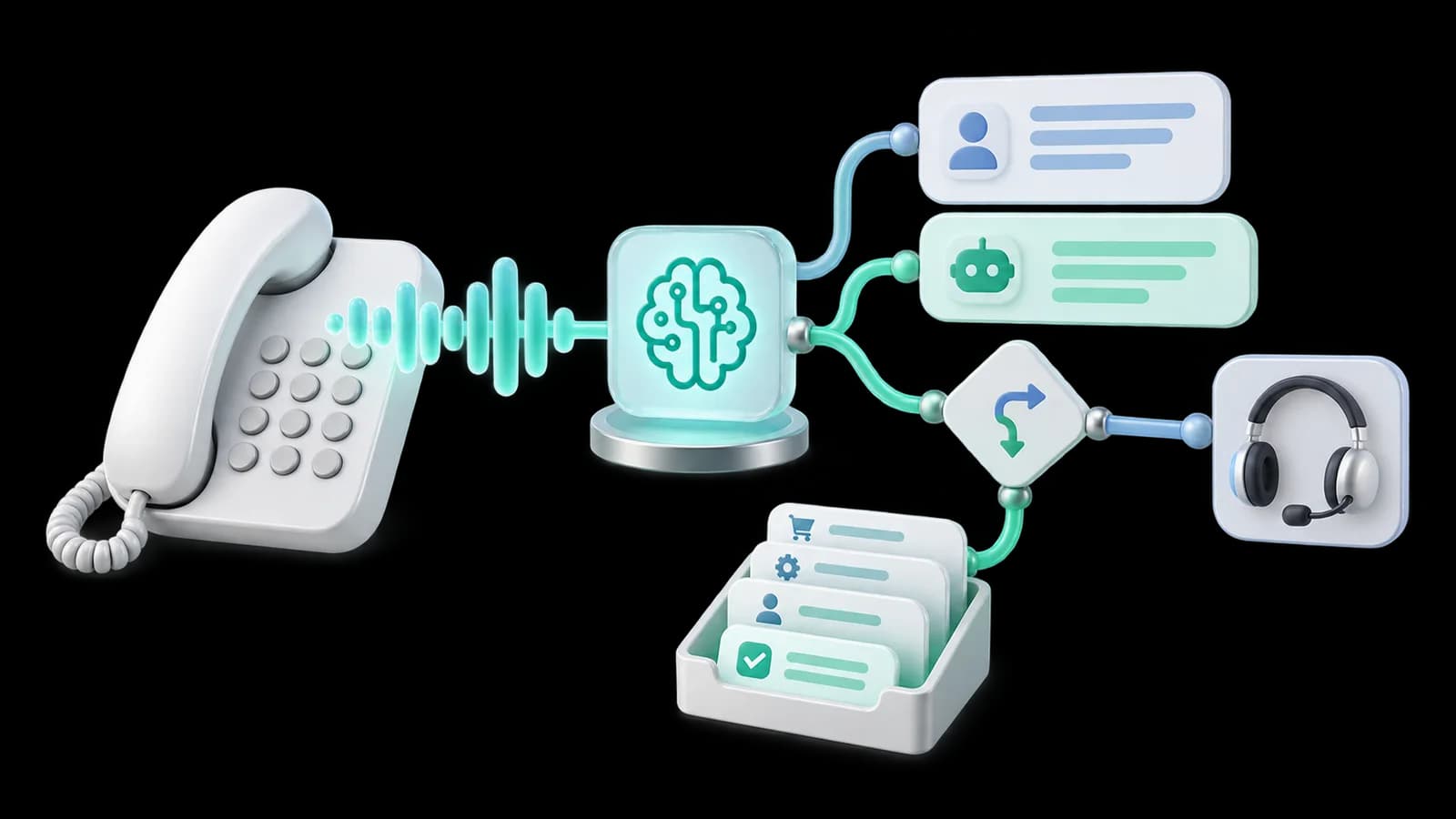
AI voice customer service is a software process that can recognize speech, understand tasks, respond to users, and interact with CRM, ticketing, scheduling, or dispatch systems. It's not a single model or simply plugging a website chatbot into a microphone. Its functionality depends on the integration of phone connectivity, field validation, business rules, system actions, and human intervention.
What are the layers of an AI voice customer service system?
A complete architecture has at least five layers: telephony, voice, dialogue, workflow and enterprise systems. Telephony handles main numbers, PBX, SIP and transfers; voice handles recognition and synthesis; dialogue identifies intent and asks follow-up questions; workflow validates fields, permissions and state. Only then do API calls create tickets, bookings, CRM records or dispatch requests. Demonstrating natural conversation alone does not establish that the remaining four layers run reliably.
Responsibility breakdown from incoming call to enterprise system actions
Hierarchy
Primary responsibilities
Essential validation points
Phone and routing
Call centers, PBX/SIP, queuing, transfers, and overflow
Peak call volume, dropped calls, human intervention, and number retention
Voice and conversation
Speech recognition, synthesis, intent detection, and clarification
Handling accents, noise, jargon, and low confidence
Workflow
Field verification, permissions, rules, status, and duplicate requests
Insufficient data, user misinterpretation, idempotency, and timeouts
Enterprise System
CRM, service tickets, appointments, dispatch, or notifications
Creation, querying, cancellation, failure reporting, and manual follow-up
Which phone tasks are best suited for initial AI implementation?
Prioritize tasks that are highly repetitive, have clear fields, and have verifiable results, and also have a way to recover after errors:
Service status, business information, and case progress inquiries
Create service tickets after collecting address, equipment, and time-slot data
Create appointment, cancellation, or rescheduling requests based on clear rules
Create dispatch, logistics, or in-home service tasks
Pass the processed content to a human for further processing
Which scenarios should not be handled by AI in the first phase?
Medical diagnoses, legal conclusions, payment authorization, identity disputes, major customer complaints, and irreversible high-value transactions should not be automated first. Even with voice transcription, these scenarios should be verified by a human before execution. The key is not whether the AI can answer correctly, but whether it can detect, stop, and correct errors.
How to handle AI misinterpretations or system failures?
Important fields should be re-confirmed by the user, followed by backend format and business rule validation. When there are continuous misunderstandings, lack of confidence, sensitive keywords, or user requests, the system should hand over the confirmed fields and conversation summary to a human. If the enterprise API times out, it should enter a retry, queue, or pending state, and should not immediately report the task as completed to the user.
Define the boundaries for recordings, transcripts, and personal data
Phone processes may involve names, phone numbers, addresses, orders, and call content. Before implementation, the enterprise should confirm the notification method, collection purpose, access roles, retention period, and deletion process. The development team should implement permissions, masking, auditing, and environment isolation. Not all conversations need to be permanently saved, and real customer recordings should not be used directly as untranslated test data. When dealing with specific industry regulations, the enterprise's legal or compliance team should be consulted.
What did GoGoCha demonstrate?
The publicly available GoGoCha case demonstrates the integration of AI phone entry, website, and LINE ride-hailing requests into a single real-time dispatch backend, which is then synchronized to the driver/passenger app and operational interface. While the public data demonstrates the system's scope and technical architecture, it does not disclose revenue, labor savings, connection rates, or actual call SLAs. Therefore, we do not include these figures as results.
What acceptance criteria should be defined before the implementation?
Don't just test for "conversational ability"; at a minimum, use representative, real-world scenarios to assess it.
Required field completion rate and method of confirmation
Low confidence, sensitive topics, and manual intervention requirements
Task status after API timeout, duplicate requests, and connection loss
Spike merging, waiting, routing, and overflow handling
Information regarding recordings, transcripts, permissions, storage, and deletion.
Frequently Asked Questions
Are AI voice-based customer service and telephone robots the same thing?
These are commonly used in the market. When purchasing, don't just rely on the name; ensure that it can be used to naturally query, call enterprise systems, and validate fields. Also, make sure there's a fallback option to involve a human operator when needed.
Do you need to replace the company's existing phone system first?
Not necessarily. Whether or not you can continue using your existing setup depends on factors such as your telecommunications provider, PBX system, SIP, and the method of communication. It's best to conduct a thorough assessment of your current environment before making a decision.
How long will it take for AI-powered voice customer service to be available?
Dependent on the environment: Proof-of-concept projects for single-purpose systems are typically billed on a weekly basis, while formal versions including PBX and enterprise system integration are billed monthly. The key variables affecting the timeline are the maturity of the enterprise API and the progress of data consolidation, not the model itself.
Can AI-powered voice assistants handle Taiwanese or multiple languages?
The accuracy depends on the extent to which the speech recognition engine supports the specific language and accent. Before implementation, test the recognition rate using recordings from real users, which is more reliable than relying solely on the vendor's specifications. If the initial tests fail, start by limiting the scope of the service.
Let's start by discussing current call handling methods, system actions after a call, and exception handling. After outlining the requirements, we can then confirm the demo time, the scope of the demonstration, and whether a Proof of Concept (POC) is needed.